
Permission to Disappoint People

Prefer to listen?
Here’s the Podcast!
Ready to get into it?
There was a day, not that long ago, when I hadn't eaten anything all day. I had a headache. I was tired. Dinner was on the table, the boys were fed, and before I'd taken a single bite, one of them was already asking for seconds.
For years, the answer to that ask had been automatic. I'd get up. I'd serve them. I'd sit back down to a cold plate, sometimes after being interrupted four or five more times before I got a bite in. Nobody ever asked their dad, who was sitting right there eating his own dinner. They asked me. Every time.
That particular day, something in me said no.
You go get a glass of water. You're old enough to get your own seconds. I'm going to eat my food first, because taking care of me matters too.
It sounds small. It was small, in the scope of a Tuesday dinner. But underneath it was a pattern I'd been running for years without questioning it: taking care of everyone's secondary needs before I got to my own primary one. And the thing that had kept me stuck there wasn't love, though love was part of it. It was fear that if I put myself first, my kids would think I didn't care.
Responsible To, Not Responsible For
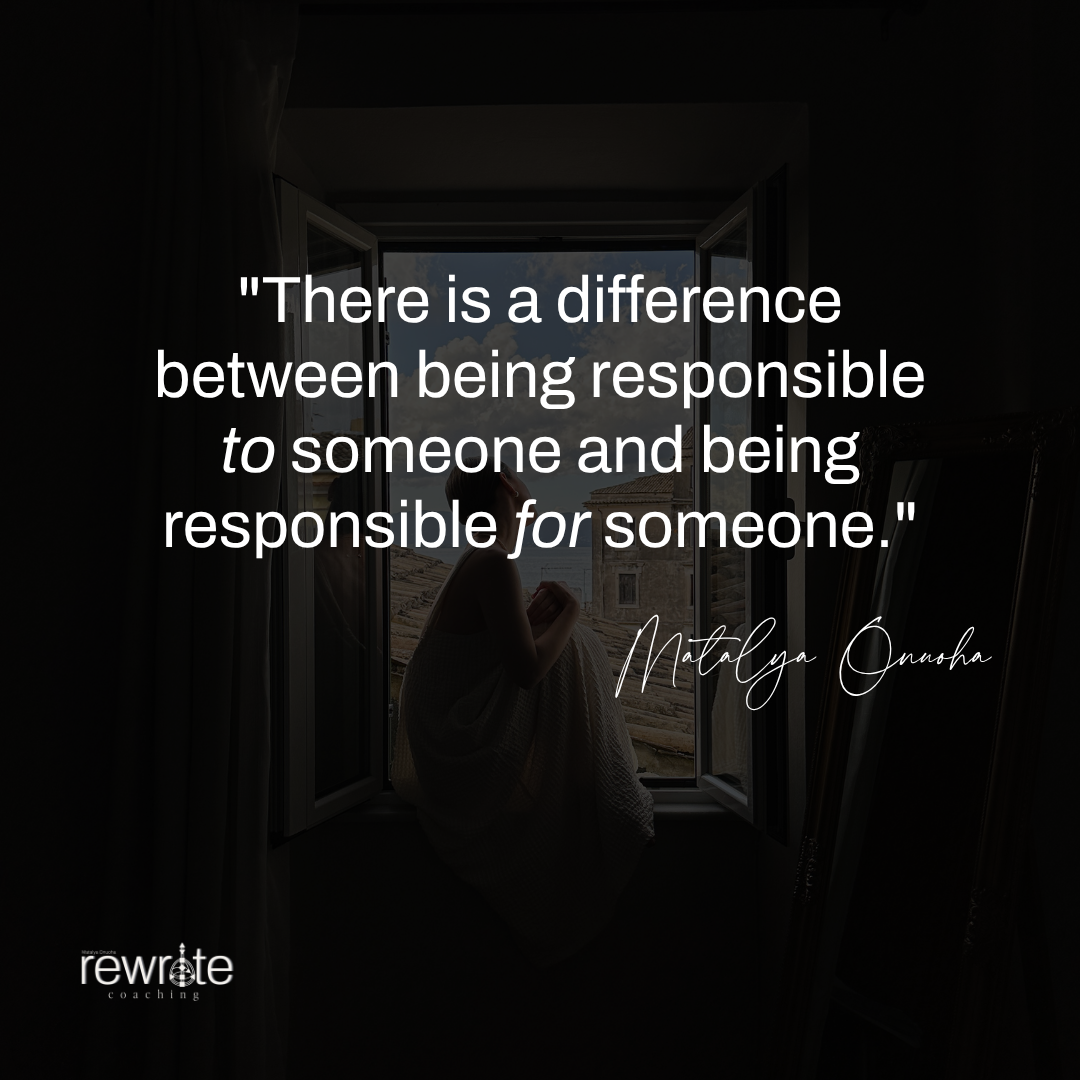
You are responsible to the people in your life. You are not responsible for how they process their disappointment. That difference changes everything once you actually let it land.
You can deliver your truth with care. You can be thoughtful about timing and tone. But what happens after you say no, whether someone feels hurt or confused or annoyed, that's theirs to move through. It was never yours to manage.
Your nervous system doesn't always know that, though. Disappointing someone can register in the body almost identically to danger, the same tightness in the chest, the same urge to backpedal. That doesn't mean it is danger. It means the body needs a little time to catch up to what's actually true.
Saying no isn't rejection. Most of the time, it's clarity. The people who are meant to stay in your life will stay. They might be uncomfortable for a moment. They might even be disappointed. But they'll adjust, because they care about you enough to.
Your Authority Was Never Built for Everyone Else's Comfort
In Human Design, your authority is the internal system that tells you what's actually true for you in a given moment. It was never designed to keep the peace. It was designed to keep you.
If you have emotional authority, that truth doesn't arrive instantly. It comes in a wave, which means the people around you might have to sit in the discomfort of not getting an answer right away. Waiting for your wave is you honoring how you're built.
If you have sacral authority, the response is immediate. A pull toward or a push away, right there in the body, before your mind has time to dress it up in politeness. That gut response doesn't care about being polite. It's just true.
And if you have spleen authority, the hit is even faster, and it's gone almost as soon as it arrives. The spleen speaks from survival instinct. Ignoring it isn't just inconvenient. It's a quiet betrayal of the part of you built to keep you safe.
None of these are asking permission. They're just telling you what's real. The work isn't figuring out how to make the truth more comfortable for whoever's standing in front of you. It's learning to trust it enough to actually follow it, even when someone else's face falls.
The Math Nobody Says Out Loud
You cannot say yes to yourself without saying no to someone else. It's just how choice works.
If you say yes to rest, you're saying no to whatever would have filled that time. If you say yes to the boundary, you're saying no to the version of the relationship that only worked because you kept absorbing the cost. Someone calling you selfish for finally choosing yourself usually just means they wanted you to keep choosing them instead.
The question was never whether you'll disappoint people. You will. Everyone does. The real question is whether you're willing to disappoint them in service of a life that's actually yours.
Listen to the Full Episode
This one goes deeper into the practice of starting small, practicing "no" in the low stakes moments before you ever need it in the ones that matter, and what it actually feels like in the body to sit with a boundary before you've even said it out loud.
In this episode:
Why disappointing someone is not the same thing as harming them
The difference between being responsible to a person and responsible for their reaction
How emotional, sacral, and spleen authority each carry the truth differently
Why you can't say yes to yourself without saying no to someone else
A practice for identifying the one small "yes" you've been giving that you actually want to take back
Listen Now:
What's Next?
If reading this stirred something, some list of small yeses you've been giving away for years, that's worth paying attention to. This is exactly the kind of pattern The Rewrite is built to work through. Ten weeks, one on one, using your actual Human Design blueprint to find where you've been managing everyone else's comfort at your own expense, and start making decisions from what's actually true for you instead.
Not ready for that yet? Start with your free Human Design blueprint and see where your own authority has been trying to get your attention.
About the Author:
Matalya Onuoha is a Human Design Strategist and the creator of The Rewrite Method™. She helps people separate from the expectations and obligations that have been shaping their lives so they can build something that is genuinely theirs.