Stop Calling It Imposter Syndrome

Prefer to listen?
Here’s the Podcast!
Ready to get into it?
During my coaching certification, we were practicing a tool called parts integration. One part of me was ready to move forward in my business. Another part kept pulling me back. I couldn't land anywhere, so I volunteered to be the practice subject.
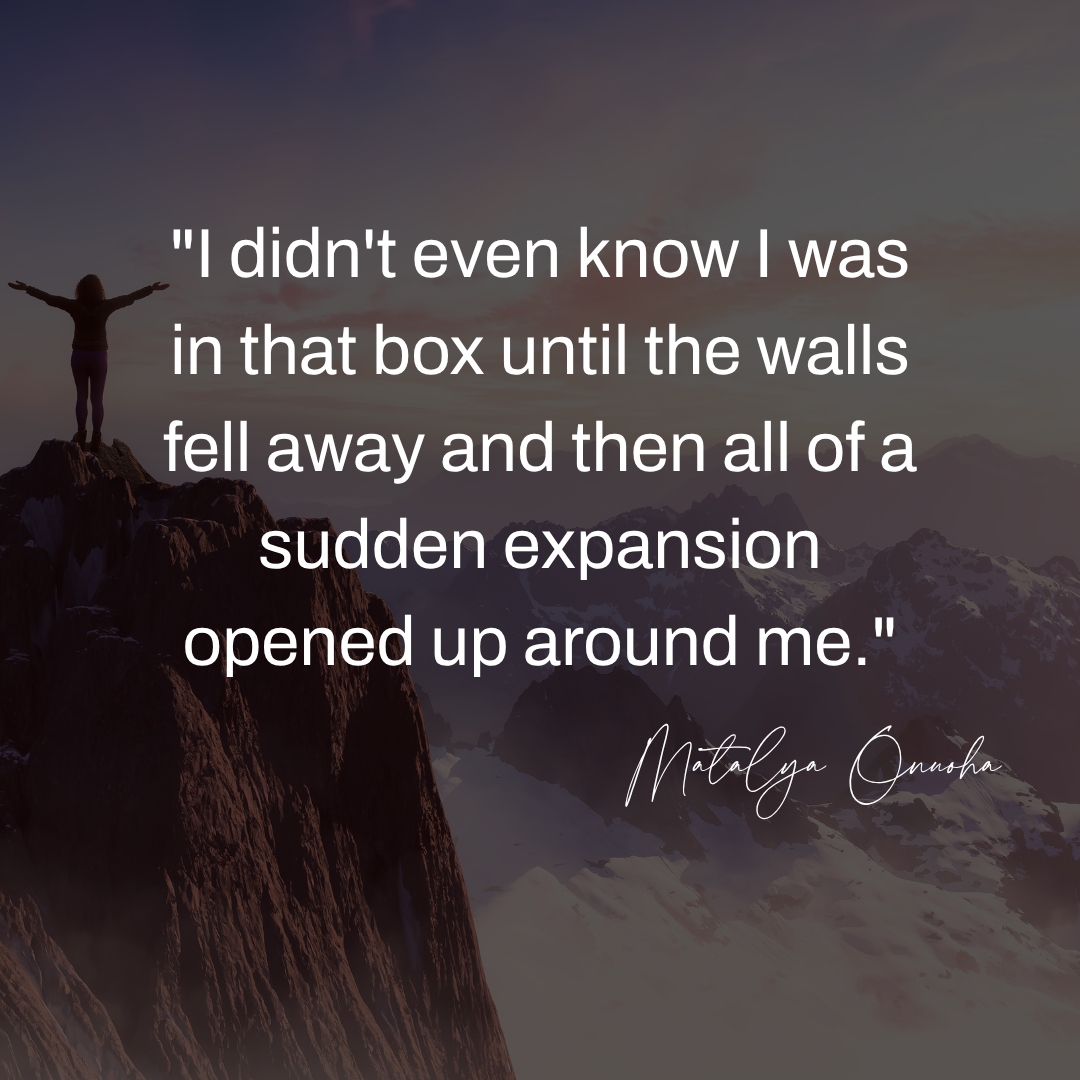
When the parts came together, I had a visual. Four walls and a ceiling. Like I'd been living inside a box. And then all at once the sides fell away. Expansion in every direction. I hadn't even known I was in there until there was suddenly nothing around me.
I realized in that moment what I’d been experiencing up until that point imposter syndrome, at least not in the way we usually talk about it. And I think we've been calling it the wrong thing, which means a lot of us are trying to fix the wrong problem.
The Misdiagnosis
Imposter syndrome has become a catch-all. Nervous before a big presentation? Imposter syndrome. Second-guessing a decision? Imposter syndrome. Out of place in a new room? Imposter syndrome.
Two very different things are getting collapsed into one label.
Healthy doubt is situational. It asks, “Am I prepared? Do I have enough information?” It invites you to gather more, get sharper, collaborate. It's a tool. It moves you forward.
Self-erasure is something else. It's not situational. It's an identity statement. The quiet whisper underneath everything that says, “I am fundamentally not enough, regardless of what I know.” It's what drives the overpreparing, the perfectionism, the procrastinating. Instead of asking you to improve, it's telling you to hide.
One is a useful signal. The other is a coat you forgot you were wearing. (Or in my case, an invisible box you become trapped in.)
Why It's Hard to See
Self-erasure, like all limiting beliefs, sound like your own voice. Your own reasonable concerns. Your own very thorough list of reasons why now isn't the right time.
So you work on it the way you'd work on anything. Affirmations, journaling, credentials, pushing through. And sometimes that helps, for a while. But if the root is an identity-level belief, the surface work is always going to fall short, because the tools aren't reaching where the problem actually lives.
What Human Design Shows You
Your design gives you a way to tell the difference between your own knowing, and borrowed noise.
The key is your not-self theme. Every type has a signature, the felt sense of being on track. Projectors feel success. Generators feel satisfaction. Manifestors feel peace. Reflectors surprise. When you're not in that state, when things feel heavy and tight and off, that's information. It's your design flagging that what's running in the background right now isn't actually coming from you.
For me as a Projector, the imposter feeling would come when I was waiting without direction. Not doing anything to let my work be visible, then feeling unseen and wondering if I even belonged. I read that discomfort as impostor syndrome, but really it was telling me I'd been waiting wrong.
When you stop trying to think your way through the noise and start checking in with what your body is actually saying, the self-erasure gets quieter and you’re able to you stop mistaking it for the truth.
A Practice to Try
When that wave of insecurity hits, ask yourself one question:
Is this thought serving my current truth, or is it an old recording?
Your subconscious has one directive, keep you safe. And for better or for worse, familiar feels safe. Even when familiar is what's holding you back.
To create a moment of stillness, place your hand on your heart, close your eyes, and take three slow deep breaths. While you do, look slightly upward behind your closed eyes. That activates the vagus nerve and sends a safety signal to your nervous system. From there you can access your own answer more clearly.
Then write down one belief that is no longer yours. Put it on paper. Cross it out. Getting it out of your head and onto the page makes it separate from you. Crossing it through is the choice, made visible.
This Is Identity-Level Work
There's a difference between someone working out for an upcoming vacation and an athlete. The athlete doesn't negotiate with herself about whether to move. That's just who she is. The other person might be genuinely committed, but she's running on will. And will runs out.
When the shift happens at the identity level, the negotiating stops. The woman who knows she belongs in the room doesn't have to convince herself of it. She just shows up, because that's who she is.
That's what we do inside The Rewrite. Your Human Design is the blueprint. We use it to find where you've been absorbing other people's standards as your own, and then we go to work clearing it. Understanding the pattern and releasing the pattern are two different things. The walls falling away is the part most people have never gotten to yet.
Listen to the Full Episode
In this episode of Worthy of Wealth, I cover:
Why imposter syndrome is often a misdiagnosis and what the deeper wound actually is
The difference between healthy doubt and chronic self-erasure
What a parts integration is and what happened when I did one on myself
How your Human Design type and not-self theme help you tell the difference between your own knowing and borrowed noise
A simple somatic practice you can use anywhere to create clarity in the moment
The writing exercise that physically separates you from the belief that's been keeping you stuck
Listen Now:
What's Next?
If you're ready to understand your own design and start clearing what's been running underneath:
Start with your free Human Design chart. You'll get your chart plus a mini energetic blueprint so you can start understanding how you're actually wired.
Apply for The Rewrite. It's a 10-week private coaching experience for the woman who knows something needs to change but can't name what yet. We use your Human Design as the foundation and go to work clearing the conditioning, the identities that were never yours, and the patterns that have been making decisions for you.
About the Author:
Matalya Onuoha is a Human Design Strategist and the creator of The Rewrite Method™. She helps people separate from the expectations and obligations that have been shaping their lives so they can build something that is genuinely theirs.